

Representative image. | Culture, Commerce and Heritage of India.
The Indus Waters Treaty’s technical provisions are increasingly outdated, failing to account for modern advancements in dam engineering and construction as well as the volatile impacts of climate change. By adhering to 1950s-era technical constraints, the Treaty has effectively stifled advancements and innovations in engineering and construction of dams as well as hydroelectric projects and sustainable sediment management. Technologically, the Indus Waters Treaty is ‘frozen’ in time.
Introduction
The Indus Waters Treaty (IWT), negotiated under the auspices of the World Bank and signed in Karachi on 19 September 1960, by Indian Prime Minister Jawaharlal Nehru and Pakistani President Ayub Khan, was a landmark water-sharing Agreement. The Treaty allocated about 20% of the total Indus Basin’s waters to India and about 80% to Pakistan. At that time, it was aimed to achieve the most complete and satisfactory utilisation of the waters of the Indus system of rivers in a spirit of goodwill and friendship.
However, over six decades later, it has become clear that fundamental changes in circumstances since the Treaty was signed, including demographic growth, technological progress and the increasing need for clean energy, require a reassessment of the obligations under the Indus Waters Treaty. The technical know-how available at the time of negotiation of the Treaty has become outdated over time. It is clear that the technological progress and environmental shifts have outpaced the Treaty’s original framework. When the Treaty was signed, it was regarded as a progressive document, well ahead of its time.
Over the years, however, Pakistan has sought to undermine the very basis and foundation of the Treaty by advocating narrow interpretations that prevent technical advances from being implemented in Indian hydropower projects and effectively bind India to outdated technologies and concepts. Pakistan has sought to restrict India’s design and construction of dams and hydroelectric projects to the technological standards of the 1960s, despite the fact that the Treaty itself allows consideration of sound engineering practices. At the same time, Pakistan continues to use the latest and updated technologies for its own projects in the Indus basin.
The Treaty’s technical provisions are increasingly outdated, failing to account for modern advancements in dam engineering and construction as well as the volatile impacts of climate change. By adhering to 1950s era technical constraints, the Treaty has effectively stifled advancements and innovations in engineering and construction of dams as well as hydroelectric projects and sustainable sediment management. Technologically, the Indus Waters Treaty is ‘frozen’ in time.
The Indus River Basin
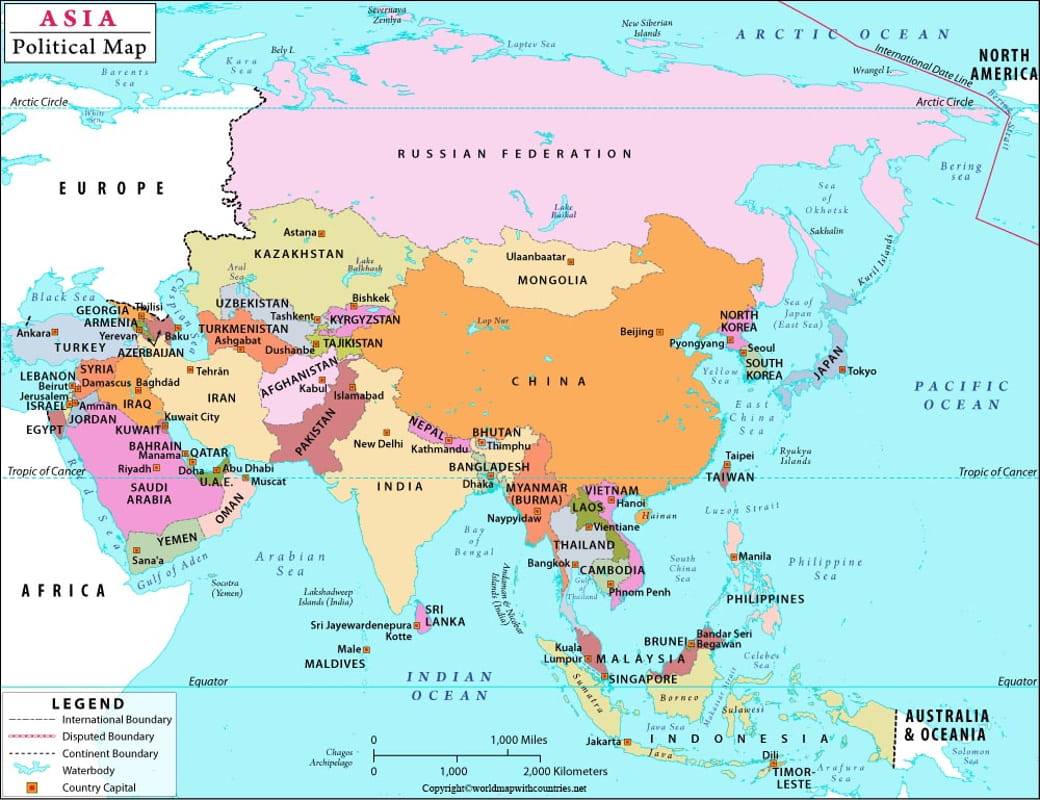
The Indus River System is one of the largest river systems in South Asia, draining parts of China (Tibet), India, Afghanistan, and Pakistan before discharging into the Arabian Sea near Karachi. The system is centred on the Indus River, which is joined by several major tributaries along its course. Among its important right-bank tributaries is the Kabul River, which rises in Afghanistan and joins the Indus in Pakistan. The principal tributaries of the Indus are the Jhelum, Chenab, Ravi, Beas and the Sutlej Rivers. These rivers eventually combine to form the Panjnad River, which later joins the Indus River in Pakistan.
Under the framework of the Indus Waters Treaty, the Indus, Jhelum and Chenab are classified as the Western Rivers, while the Ravi, Beas, and Sutlej are designated as the Eastern Rivers. The Indus and the Sutlej originate in the Tibetan Plateau whereas the Jhelum, Chenab, Ravi and Beas do so in the Himalayan region within Indian territory.
Salal Hydroelectric Project (690 MW)
The Salal Hydroelectric Project (690 MW) is a run-of-the-river hydroelectric power plant on the Chenab River in the Reasi district of Jammu and Kashmir developed by the National Hydroelectric Power Corporation Limited (NHPC), a Public Sector Undertaking (PSU) company. The Project’s construction commenced in early 1970s and it was commissioned in two stages in 1987 and 1995. It was the first major hydropower project built by India on the Chenab River under the framework of the Indus Waters Treaty.
The Project has a unique combination of a 113-metre high, 487-metre long concrete gravity dam and a 118-metre high, 630-metre long rockfill dam, with 284 million cubic meter (MCM) water storage. The top elevation of the dam is 495.9 metres (1627 feet). The maximum water level of the reservoir is 494.08 metres (1621 feet) and full reservoir level is 487.68 metres (1600 feet). Overflow spillways have been provided near to top of the dam having a crest elevation of 478.68 metres (1,570 feet). It was designed to provide electricity to the Northern Grid, including regions of Jammu and Kashmir, Punjab, Haryana, Himachal Pradesh, Delhi and Rajasthan.
Its original design also incorporated sediment-management features, including six under-sluice spillways (low-level outlets) for hydraulic flushing of sediments, in line with international practices for managing sediment in large dams.
Objections from Pakistan
However, based on objections from Pakistan, even though the Treaty did not require it to do so, India agreed to plug the under-sluice gates and even lowered the height of the dam. This resulted in catastrophic consequences for this Project. When the under-sluice gates were plugged, the dam lost its ability to ‘flush’ the river's heavy silt load. Instead of water, the reservoir began filling with sediments (clay, sand and boulders). Within a few years, the ‘dead storage’ (the area below the full pond level) was almost completely filled with sediments. Restrictions were also placed on the ‘operating pool’ of the reservoir, limiting the dam's ability to manage water levels effectively.
Misuse of Provisions under the Treaty by Pakistan
The Indus Waters Treaty as per Article III, Annex D, Para 8 (d) provides that “there shall be no storage below the dead storage level, unless necessary for sediment control or any other technical purpose, any such outlet shall be of minimum size, and located at the highest level, consistent with sound and economical design with satisfactory operation of the Project.”
The above-mentioned provision under the Treaty, “sound and economical design with satisfactory operation of the project”, was completely ignored while plugging the under-sluices of the Project. Plugging of the under-sluices has resulted in filling almost the entire 284 million cubic meter (MCM) storage capacity of the reservoir with sediments within a few years of its commissioning in the year 1987.
As of today, more than 97% capacity of the reservoir has been filled up with sediments. Basically, this is the result of ignoring the sound and economical design with satisfactory operation of the Project as per provisions under the Treaty mentioned above. Figure 1 shows a picture of the reservoir of Salal Dam completely filled up with sediments. It can be seen that the reservoir has only sediments and vegetation and almost no water.
The sediment-filled reservoir of Salal Dam is leading to significant wear and tear to the underwater parts of the generating units in the power house of the Project. Operational and maintenance costs of the turbines have increased manifold due to plugging of the under-sluices which resulted infilling of the reservoir with sediments. Further, the project's primary purpose of providing morning and evening peak generation support to the national electricity grid has been completely lost. Pakistan’s undue objections have resulted in this hydroelectric Project failing to serve the purpose of energy transition required for climate change adaptation.
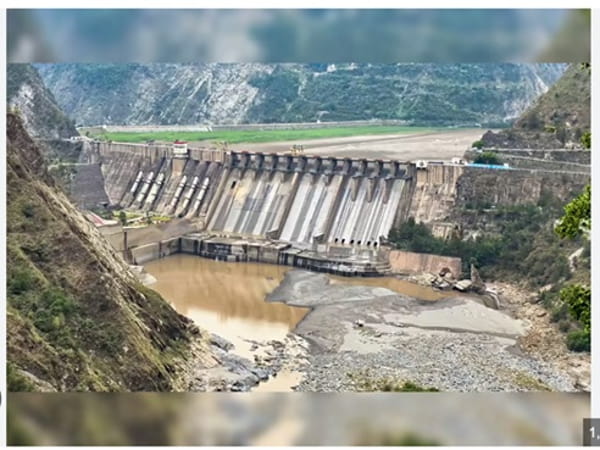
Figure 1: Salal Dam filled with sediments and vegetation but no water
Professional ‘Handcuff’ of Engineers
Design and construction engineers of Salal Dam were professionally ‘handcuffed’ and prevented from using standard sediment management techniques as per provisions of the Treaty. This resulted in the reservoir silting up almost to the top of the dam within a few years of the project’s commissioning.
Currently, the NHPC, the owner of this Project, has undertaken large-scale dredging operations to remove millions of tonnes of sediments. Despite significant expenditure aimed at keeping the Project operational in the long run, these efforts are unsustainable, as the recurring costs of such operations are untenable.
Sedimentation up to the full reservoir level of the dam has resulted in silt being deposited above the full reservoir level in the initial reaches. A faulty design, imposed by Pakistan’s refusal to honour provisions of sound and economical design with satisfactory operation of the Project under the Treaty and compelling India to plug the under-sluices has even caused sediments to enter the fields of farmers along the riverbanks. In some cases, sediments have entered the houses of residents in the upper reaches of the reservoir, forcing them to abandon their houses and relocate.
Neutral Expert on Baglihar Dam
Professor R. Lafitte, a Swiss Engineer at the Federal Institute of Technology, a Neutral Expert appointed for the Baglihar Project stated as follows, “It appears that the Treaty is not well developed as far [as] the provisions on sediment transport. This is not a criticism. The Treaty reflects the status of the technology on reservoir sedimentation in [the] 1950s”.
Pakistan’s Flawed Interpretation of the Treaty’s Provisions
Interpretation of provisions of the Treaty by Pakistan has been flawed and is devoid of sound engineering perspective. On the Western rivers, namely the Indus, Jhelum and Chenab, India has been allowed to construct run-of-the-river hydroelectric projects with limited storage capacity, defined under the Treaty.
These rivers are flowing through the Himalayas with a very steep gradient and carry a very high annual sediment load. For example, the River Chenab at Salal Dam has an annual sediment load of about 32 million cubic meters. For such high sediment load in these rivers, Pakistan’s objections to adopting sound design and state of the art practices for sediment management and its insistence on ungated spillway or crest gated spillways without low-level outlets clearly show that such narrow interpretation of the provisions of the Treaty are not aligned to the ground realities.
Article III (2) (d), Annex D, Para 8(e) statesthat “If the conditions at the site of a Plant make a gated spillway necessary, the bottom level of the gates in normal closed position shall be located at the highest level consistent with sound and economical design and satisfactory construction and operation of the works.”
Keeping aside modern engineering practices for the construction of safe and sustainable dams, Pakistan has sought to restrict provisions in a manner that effectively requires the construction of a ‘dead’ concrete wall (dam) on the highly sediment laden Himalayan rivers. Such structures tend to get filled with sediment within a few years, thereby significantly reducing their operational efficiency and undermining the basic purpose of energy generation for which these dams of hydroelectric projects are constructed.
Pakistan's Double Standards
Pakistan is constructing a number of major hydroelectric projects like Diamer Basha (4500 MW) located on the river Indus in Pakistan-occupied Kashmir (PoK), Dasu (4320 MW) located on the Indus River in the Upper Kohistan District of Khyber Pakhtunkhwa (KP) province of Pakistan, and Mahl (640 MW) located on the river Jhelum in PoK. Patrind (147 MW) and Karot Hydroelectric Project (720 MW) both located in the PoK and the bordering districts of Pakistan, have been commissioned in the year 2022 and 2017 respectively.
All these projects provide for sediment management through hydraulic sluicing via low-level under-sluices or desander arrangements, utilising modern engineering practices. In none of these projects, technological know-how of the 1950s is being used. It is therefore unsustainable to compel India to use the technological know-how of the 1950s in sediment laden rivers of the Himalayas, as per wrong interpretation of the Treaty, by ignoring the basic principle of ‘sound and economical design and satisfactory construction and operation of works.’
Conscience of Engineering Professionals Constructing Dams
In the present-day environment, the author would like leave it to the judgment of the professionals, whether construction of dams without any sediment management practice as is being compelled under the Treaty in India, on the Himalayan rivers flowing in steep gradients and carrying heavy sediment load, is being adopted anywhere else in the world. It is also a fact that no upper riparian State has been subjected to such draconian provisions regarding the construction of unsustainable dams, including numerous restrictions on their operation and maintenance
In order to make the Salal Dam sustainable in terms of sediment management, the under-sluice gates provided in this dam should be opened. Such a practice has been adopted in many existing dams throughout the world.
(Exclusive to NatStrat)

Strategic Autonomy & Multipolarity: Fault Lines in the Emerging Security Framework